How a Brazilian municipality accelerates faster flood response with Hikvision water-level detection
HANGZHOU, China, June 30, 2026 /PRNewswire/ -- When Brazil's Taquari River threatens to overflow, the Municipality of Muçum no longer waits and watches — it knows. Using Hikvision's water-level detection solution, the town gets faster, more accurate insights about the changing water levels in the river. This strengthens emergency responses and helps protect communities across the Taquari Valley.
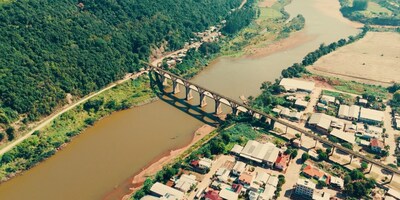
Located in Rio Grande do Sul, the southernmost state of Brazil, the Municipality of Muçum is part of a wider region that has grown up along the Taquari River which runs through this mountainous region. Following relentless rainfall in both 2023 and 2024, the region experienced flooding of historic proportions. In 2024, more than 600,000 people were displaced and infrastructure was damaged across nearly every municipality in the region, according to a report by Médecins Sans Frontières.
For the people of Muçum and its neighboring cities, the focus quickly shifted from reacting to floods to preparing for them more effectively. Previous approaches had relied on manual observation and physical gauges. But such solutions, as they knew only too well, are unable to provide the kind of continuous, integrated, and real-time visibility that is so vital during extreme weather conditions.
To support these goals, the town worked with system integrator Infosat and distributor Tecline to deploy Hikvision's intelligent water-level monitoring solution.
Combining video imaging and millimeter-wave radar technology in a single device, the solution allows operators to visually monitor river conditions while simultaneously receiving highly accurate water-level measurements in real time.
Unlike traditional gauges positioned close to the water, the radar-based system can measure water levels from distances of up to 40 meters. This elevated installation approach helps ensure continuous operation even during major floods, when conventional equipment may become submerged or damaged.
The solution's millimeter-level precision allows emergency teams to detect even small changes in water levels and receive alerts when predefined thresholds are reached. With earlier visibility into changing conditions, emergency teams gain valuable time to evaluate risks, coordinate response actions, and prepare nearby communities.
The device delivers 4 MP high-quality imaging, allowing operators to visually confirm river conditions in real time. Its 120 dB WDR technology helps maintain clear images in challenging lighting environments, while the IP67-rated housing supports reliable outdoor performance during harsh weather.
To support emergency communication, five Hikvision Network Speakers were installed in flood-prone neighborhoods to broadcast evacuation warnings and other emergency announcements.
The entire solution is managed through HikCentral Professional, enabling operators to monitor water levels in real time, manage alerts, review live video, and analyze historical data from a single platform.
Since the deployment, the Municipality of Muçum has reported an 80% increase in the accuracy of water-level information compared with previous manual readings. Real-time monitoring and automated alerts now help emergency teams respond more proactively while improving communication with residents during critical situations.
Find out more
For more information about Hikvision's intelligent Water-Level Detection Camera, please visit our official website.
Photo - https://mma.prnewswire.com/media/3002321/image1.jpg
 View original content:https://www.prnewswire.co.uk/news-releases/how-a-brazilian-municipality-accelerates-faster-flood-response-with-hikvision-water-level-detection-302814304.html