Jinko ESS and Taliva Energy Sign 400MWh Energy Storage Project Portfolio
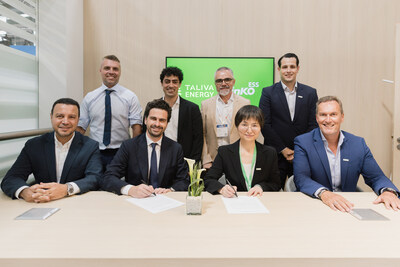
MUNICH, July 2, 2026 /PRNewswire/ -- Recently, Jinko ESS, a leading global energy storage company and a subsidiary of JinkoSolar Co., Ltd., and Taliva Energy, a clean energy company focused on full-scope energy storage solutions and large-scale energy infrastructure in Romania and Türkiye, with a growing presence across Europe, officially signed contracts covering 400MWh of battery energy storage system (BESS) projects across multiple utility-scale developments in Eastern Europe. The signing marks a significant milestone in the strategic cooperation between the two companies and demonstrates their shared commitment to accelerating the deployment of large-scale energy storage solutions that support Europe's clean energy transition.
As renewable energy penetration continues to increase across Europe, battery energy storage has become a key enabler of grid stability, renewable energy integration, and power system flexibility. Utility-scale storage projects require not only high-performance technology, but also trusted partnerships capable of delivering reliable products, efficient project execution, and long-term operational support. The growing cooperation between Jinko ESS and Taliva Energy reflects the increasing market demand for proven energy storage solutions that create long-term value for developers and grid operators.
The signed portfolio represents 400MWh of battery energy storage capacity across several projects, further strengthening both companies' positions in the rapidly expanding European energy storage market. These projects will contribute to enhancing grid flexibility, increasing renewable energy utilisation, improving energy resilience, and supporting the transition towards a more sustainable and reliable electricity system.
Anita Li, Vice President of Jinko ESS, said: "At Jinko ESS, we believe the future of energy requires both innovative technology and trusted local partnerships. The expansion of our cooperation with Taliva Energy is an important step in supporting Europe's energy transition by delivering reliable, scalable, and high-performance energy storage solutions where they are needed most."
Mario Dalsarfati, CEO of Taliva Energy, added: "Energy storage is becoming one of the most critical pillars of Europe's energy transition. For Taliva Energy, this 400MWh portfolio represents more than a project milestone; it reflects our ambition to build reliable, bankable, and long-term energy infrastructure across Europe. By combining Taliva Energy's project development and market execution capabilities with Jinko ESS's advanced technology and global experience, we aim to deliver high-value BESS projects that support grid flexibility, renewable energy integration, and a more resilient energy future."
The signing ceremony, held during Intersolar Europe, highlights the continued growth of the partnership and reinforces both companies' commitment to advancing large-scale battery energy storage deployment across Europe.
As an energy storage system solutions provider, Jinko ESS will continue to work closely with strategic partners such as Taliva Energy to deliver reliable products, advanced system integration, efficient project delivery, and comprehensive lifecycle services, providing a stronger, more flexible, and sustainable foundation for the global energy transition.
Photo - https://mma.prnewswire.com/media/3003063/12077.jpg
 View original content:https://www.prnewswire.co.uk/news-releases/jinko-ess-and-taliva-energy-sign-400mwh-energy-storage-project-portfolio-302816573.html