Silver Mountain Moon: A Major Silk Road Exhibition Opens during 2026 Silk Road Week at China National Silk Museum
HANGZHOU, China, June 22, 2026 /PRNewswire/ -- The China National Silk Museum will launch its flagship exhibition, Silver Mountain Moon: Gaochang and Kucha on the Silk Road, on June 24, 2026. The exhibition, curated as the centerpiece of the 2026 Silk Road Week, runs under the theme "Harmony in Diversity, For a Shared Future."
Since its launch in 2020, Silk Road Week has evolved into a premier hallmark, featuring thematic exhibitions, academic symposiums, and events such as "Silk Road Nights." The 2026 Silk Road Week, with Xinjiang Uygur Autonomous Region as the guest region and the Kingdom of Morocco as the guest country of honor, offers a rich lineup of scholarly exchanges and public engagement activities.
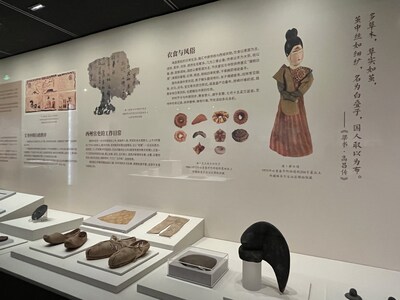
The exhibition Silver Mountain Moon traces the northern route of the ancient Silk Road—known as the "Middle Route" in the Tang Dynasty—from pivotal Gaochang in the Turpan Basin (present-day Turpan, Xinjiang Uygur Autonomous Region, China) westward to the renowned Buddhist center Kucha (present-day Kuqa, Xinjiang Uygur Autonomous Region, China). Featuring over 200 relics from 14 institutions in Zhejiang Province and the Xinjiang Uygur Autonomous Region, including 20 first-class national treasures, the exhibition showcases archaeological finds from ancient city sites and cave temples. Among the highlights are thousands of ancient manuscripts unearthed in Gaochang that testify to the region's administrative integration with the Central Plains during the Han and Tang dynasties, alongside exquisite murals from the Kizil Caves that reflect the fusion of Indian, Hellenistic, Persian, and Central Plains artistic traditions.
Located at the heart of the Eurasian continent, Xinjiang has been an integral part of China's territory since the Han Dynasty, when the central government established military garrisons and administrative offices in the region. The exhibition illustrates this history, demonstrating how Gaochang and Kucha became hubs of exchange, where diverse ethnic groups and traditions interacted and flourished. Notable figures such as the eminent monk Kumarajiva, who translated Buddhist scriptures for the Central Plains, and King Jiangbin of Kucha, who adopted Han court customs, are symbols of this enduring cross-exchange.
The exhibition Silver Mountain Moon will be on display from June 24 through September 1, 2026, at the China National Silk Museum in Hangzhou. It invites audiences to explore the profound legacy of the Silk Road and the inclusive spirit shaping Chinese civilization over thousands of years.
Photo - https://mma.prnewswire.com/media/2997992/1.jpg
 View original content:https://www.prnewswire.co.uk/news-releases/silver-mountain-moon-a-major-silk-road-exhibition-opens-during-2026-silk-road-week-at-china-national-silk-museum-302806135.html